Views: 0 Author: Site Editor Publish Time: 2026-11-16 Origin: Site


A landscape lighting transformer not working does not always mean the transformer needs replacement. A supply interruption, incorrect control setting, protective shutdown, or fault in the garden wiring can produce similar symptoms.
Start by identifying how much of the system is affected. Then check the power supply, operating controls, protection devices, and lighting circuits in that order.
Disconnect power before changing wiring or tightening terminals. Keep checks within the user-accessible areas identified in the manual. Damaged supply wiring, water inside electrical equipment, and internal mains-voltage testing require qualified service.
Table of Contents

The pattern helps narrow the investigation.
Symptom | Checks to prioritize |
|---|---|
Every light is off | Supply, operating mode, controls, protection, and transformer output |
One cable run is off | That run’s terminals, cable, connections, and connected fixtures |
One fixture is off | Lamp, local connection, socket, or integrated driver |
Lights work, then shut down | Loading, temperature, intermittent faults, and control events |
Distant lights are dim | Loaded voltage, cable resistance, and shared connections |
A protective device repeatedly trips | Fault investigation before further resets |
These are starting points, not confirmed diagnoses.
If most lights operate normally, replacing the transformer should not be the first action. Investigate the affected fixture or branch.
Ask whether the issue followed:
Heavy rain or irrigation changes.
Digging, edging, or other landscape work.
New lamps or additional fixtures.
A power interruption.
Changes to timers, photocells, or connected controls.
Cable or transformer maintenance.
Record the transformer model and photograph the settings and cable connections before altering them.
A recent change can guide inspection, but timing alone does not prove the cause.
For a plug-in model, inspect the accessible cord, plug, receptacle, and cover without opening electrical boxes.
If the supply is dry, intact, and safe to use, follow the receptacle or circuit-protection instructions to check its status. A known working plug-in tester or suitable appliance can help establish whether power is available, but it does not certify the circuit’s full condition.
Do not energize visibly wet or damaged equipment. If a protective device will not reset or trips again, stop repeated resets and have the fault investigated.
For hardwired installations, supply-side testing belongs with a qualified electrician.
Confirm that the system is not set to OFF, a delayed schedule, or an inactive program.
Check the clock, date, location settings where applicable, and scheduled operating period. A power interruption may affect timekeeping differently from stored programming.
Use the manufacturer’s manual ON or test mode where provided. Do not bypass internal wiring to force operation.
If the lights work in manual mode, the control settings or control path need further investigation. That result does not automatically identify a failed timer.
A photocell may keep the system off because it detects daylight or nearby artificial lighting.
Inspect its location and accessible lens. Dirt, vegetation, building lights, and the landscape fixtures themselves can influence operation.
Use the approved photocell test method, such as the supplied test cap, and allow the stated response delay.
If the system turns on when the sensor is covered, it shows that the control responds to darkness. It does not by itself prove that the sensor is defective.
Radar Lighting’s RTD transformer series lists Auto and Timed functions with a remote photocell. Request the model instructions to confirm its operating modes and test procedure.
For systems using an approved smart controller, check schedules, manual overrides, account access, and device status.
A network interruption does not affect every product in the same way. Some execute stored schedules locally; others depend on connectivity for particular functions.
Use the documented recovery procedure. Avoid a factory reset as the first troubleshooting step, since it may remove settings needed for diagnosis.
Depending on the model, protection may include a secondary breaker, thermal device, fuse, or electronic shutdown.
Use the manual to identify which components are user-serviceable. Do not remove covers exposing mains wiring or sealed internal assemblies.
A fuse must not be bridged or replaced with a higher-rated alternative. Where user replacement is permitted, use the exact specified type and rating after the underlying cause has been addressed.
Repeated tripping is a symptom requiring investigation, not a reason to install stronger protection.
Look for loose conductors, stray strands, damaged insulation, corrosion, discoloration, and melted components.
Tighten only serviceable terminals, using the specified torque and permitted conductor arrangement. “As tight as possible” can damage the terminal.
Heat-damaged or severely corroded components require proper assessment. Wire-brushing a damaged terminal does not establish that it is fit for reuse.
Keep the original circuit identification. Do not join outputs from different taps or transformers during troubleshooting.
A qualified installer may isolate lighting runs individually to help determine whether one branch is associated with protective shutdown or output collapse.
Power must be disconnected before removing or reconnecting conductors. Follow the model’s instructions for testing with reduced load or disconnected outputs.
If operation returns after a branch is removed, investigate that branch and the combined loading. Possible causes include a short, overload, damaged fixture, or another load-related issue.
This result does not prove that the transformer is healthy at full load. Some electronic supplies also require a supported test load, making an unloaded test inconclusive.
Check areas where cables may have been cut, crushed, or disturbed. Inspect accessible connectors and fixtures for water entry or mechanical damage.
An open circuit interrupts power. A short circuit may operate protection. A high-resistance connection can reduce voltage or generate localized heat. These faults need different corrections.
Use connectors suitable for the conductor combination and exposure conditions. A service box provides access but does not automatically keep an unsuitable connector dry.

Output testing should be performed by someone competent to use the equipment and access the specified test points.
Confirm whether the supply provides low-frequency AC, high-frequency AC, or DC. Select a meter and procedure suitable for that output.
The 12V or 15V tap is a secondary output. It should not be confused with the mains input.
A zero reading can result from control state, protection, incorrect test points, or measurement limitations, as well as a failed component. It is not sufficient on its own to condemn the transformer.
For a system operating under its intended load, compare the transformer output with the voltage at representative fixtures.
Measurement pattern | Investigation direction |
|---|---|
No output in the approved test mode | Confirm supply, control state, protection, and measurement method |
Output returns with reduced load | Check total load, branch faults, and supply performance under load |
Source output is suitable but a distant fixture receives low voltage | Check cable losses and connections |
Fixture input is suitable but the fixture remains off | Check lamp, driver, socket, and compatibility |
Output disappears after operating for a period | Review temperature, load, controls, and intermittent faults |
Use the connected product’s permitted input range. A generic “12–15V means healthy” rule does not apply to every supply or lamp.
A compatible timer, photocell, connector, or other serviceable component may be replaceable without changing the transformer.
Confirm the part number, electrical rating, installation requirements, and warranty conditions. Test the system after repair to verify that the original fault has been resolved.
Do not infer burnt windings from smell alone. A burning odor, damaged insulation, or melted material is a reason to disconnect the equipment and obtain assessment.
Where replacement is appropriate, review the supply voltage, frequency, fixture compatibility, total load, cable runs, environmental conditions, and control requirements.
A larger transformer will not repair damaged wiring or remove cable resistance. A higher tap must not expose nearby fixtures to excessive voltage.
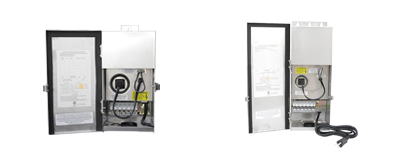
Radar Lighting’s landscape transformer range includes different configurations. The RTR-50W/100W/150W-SS series lists multiple voltage taps, but final selection still requires a compatible system design.
Contact Radar Lighting with the transformer model, fixture schedule, symptoms, control settings, and available test results to discuss replacement specifications and compatible product options.
Possible causes include interrupted supply, an OFF setting, a control issue, protective shutdown, or a fault affecting the shared circuit. Check these systematically before replacing the transformer.
No. Sound does not establish correct output or loading. A new or unusually loud noise should be assessed alongside temperature, operating conditions, and electrical measurements.
Possible causes include overload, short circuits, damaged wiring, overheating, or equipment faults. Identify which protective device operates and stop repeated resets until the cause is addressed.
Not necessarily. Verify supply, operating mode, protection, test points, and meter suitability. Internal failure is one possible explanation after those checks.
No. Confirm AC/DC output, capacity, lamp compatibility, controls, cable requirements, and outdoor suitability. Matching the nominal voltage alone is insufficient.