Views: 0 Author: Site Editor Publish Time: 2026-08-25 Origin: Site


The transition from halogen to LED fixtures fundamentally altered the electrical requirements of outdoor lighting. This shift forces a reevaluation of legacy power standards across the industry. Historically, landscape lighting relied on Alternating Current (AC) to heat incandescent filaments. Today, modern LEDs natively operate on Direct Current (DC). Choosing the wrong power delivery method leads to premature fixture failure, visible flickering, severe voltage drop over long runs, and incompatible smart controls. Resolving the AC vs DC landscape lighting debate requires evaluating existing infrastructure, wire run lengths, component availability, and specific integration needs like solar or off-grid setups. This guide breaks down the technical trade-offs. We will help you determine the optimal system architecture for your site based on field-tested installation practices and electrical realities.

Legacy Dominance vs. Native Efficiency: 12V AC remains the industry standard due to historical momentum and the availability of multi-tap transformers, but 12V/24V DC is technically superior for native LED operation.
The Rectifier Vulnerability: Using AC power for LED fixtures requires built-in rectifiers to convert AC to DC at the bulb level. These electronic components are often the first point of failure in outdoor environments.
Voltage Drop Management: AC systems excel in large-scale installations because multi-tap transformers can output higher voltages (e.g., 13V-15V) to compensate for voltage drop over long wire runs. DC systems require stricter wire gauge management or localized power supplies.
Cost and Accessibility: AC components are generally more common and less expensive upfront for general-purpose lighting, whereas pure DC systems often require specialized power supplies but offer lower long-term replacement costs.
Solar and Smart Integration: DC systems are inherently compatible with solar power, battery storage, and advanced PWM (Pulse Width Modulation) smart dimming controls without requiring inefficient power inverters.
Table of Contents
Outdoor lighting systems fall into two distinct electrical categories: line voltage and low voltage. Line voltage operates at 120V AC. This is the standard grid power used for massive commercial sites, streetlights, and high-output security floodlights. Installing 120V systems requires deep 18-inch trenches, rigid PVC conduit, waterproof junction boxes, and licensed electricians. The shock hazard is severe. Low voltage systems operate at 12V or 24V. They are inherently safer, rarely require conduit, and allow for shallow direct-burial wiring just a few inches below the soil or mulch. This guide focuses strictly on the low voltage realm. We are comparing 12V AC against 12V/24V DC, which serves as the standard for residential and light commercial landscape applications.
Alternating Current behaves exactly as its name suggests. The flow of electrons constantly reverses direction. In North America, this reversal happens 60 times per second, known as a 60 Hertz (Hz) frequency. You can think of AC as the raw power that comes directly out of a traditional wall outlet in your home. To use this power safely outdoors, a heavy magnetic transformer steps the 120V household power down to a manageable 12V AC.
Legacy landscape lighting relied heavily on halogen and incandescent bulbs. These traditional bulbs generate light by passing electricity through a tungsten filament until it heats up and glows. Because the filament relies purely on electrical resistance and friction to produce heat, it does not care about the direction of the current. The electrons can flow forward or backward. The filament still glows brightly. This mechanical simplicity made AC power highly effective and easy to deploy for legacy outdoor lighting systems. Installers could run hundreds of feet of wire, hook up halogen fixtures, and walk away knowing the system would work.
Direct Current provides a continuous, unidirectional flow of electrons. Instead of oscillating back and forth, the electrical current moves in a single, straight path from the negative terminal to the positive terminal. DC is the power inherently stored in batteries and generated by solar panels. Modern landscape lighting relies almost exclusively on Light Emitting Diodes (LEDs). By definition, a diode is an electronic semiconductor component that only allows current to flow in one direction.
Because an LED requires a constant, unidirectional current to produce light, feeding it raw Alternating Current creates an immediate problem. If you push AC power into a raw LED, the diode will turn on and off 60 times per second as the current reverses. This results in a severe, visible strobe effect. To bridge the gap between legacy AC transformers and modern LED technology, manufacturers place a tiny electronic component called a rectifier inside AC-compatible LED bulbs. The rectifier takes the incoming AC wave and forces it into a usable DC output right at the fixture level. Pure DC systems bypass this entirely. They feed the native unidirectional power directly to the diode without the need for internal conversion.

Voltage drop is the most persistent challenge in low-voltage outdoor systems. As electrical current travels through copper wire, the natural resistance of the metal consumes some of the voltage. The longer the wire run and the higher the wattage load, the more voltage is lost before the power reaches the final fixture. If a 12V system drops below 10.5V at the end of a run, lights will appear noticeably dimmer or fail to ignite entirely. You cannot cheat Ohm's law in the field.
AC systems handle voltage drop exceptionally well on large properties. Professional AC transformers feature multi-tap terminals on the secondary coil. They typically offer 12V, 13V, 14V, and 15V outputs. If you have a fixture located 200 feet away, you connect that specific wire run to the 15V terminal. The wire will naturally lose 3V over the distance. The final fixture receives a perfect 12V. DC systems face stricter limitations. Most DC power supplies output a fixed 12V or 24V. You cannot easily tap up the voltage at the source. To combat voltage drop in DC systems, you must utilize thicker AWG wire, shorten your runs, or step up the entire system architecture to 24V DC. Pushing 24V DC moves current much more efficiently over long distances than 12V DC.
The market reality heavily favors AC for basic installations. 12V AC fixtures, magnetic transformers, and replacement drop-in LED bulbs are ubiquitous. You can find them in any local hardware store, big-box retailer, or professional irrigation supply house. Because the manufacturing volume is so high, AC components are highly accessible for standard residential projects. If a bulb burns out on a Friday afternoon, you can easily find a replacement locally.
DC availability is growing rapidly, but it remains a more specialized ecosystem. Pure DC landscape fixtures and weatherproof DC power supplies often require sourcing from dedicated LED manufacturers, smart home integrators, or off-grid suppliers. The ecosystem offers distinct advantages for advanced setups. DC is the required standard if you plan to integrate color-changing RGBW strip lights, architectural linear lighting, or complex zoning controllers. Smart controllers use Pulse Width Modulation (PWM) to dim LEDs. PWM works by rapidly turning a DC signal on and off. You cannot effectively apply PWM dimming to an AC line.
The primary weakness of an AC LED system lies hidden inside the bulb. The miniature rectifier required to convert AC to DC generates internal heat. When you cram a rectifier and a diode into a sealed, weatherproof brass fixture and subject it to blistering summer sun and freezing winter nights, thermal management fails. The electronic capacitors inside the rectifier degrade rapidly under temperature fluctuations. In most AC landscape lighting failures, the LED diode itself is perfectly fine. The rectifier burns out, rendering the entire bulb useless.
Pure DC systems remove the rectifier from the fixture entirely. By delivering native DC power straight to the diode, the fixture generates significantly less heat. This drastically extends the operational lifespan of the LED. Low-quality rectifiers in AC bulbs often fail to smooth out the power wave completely. This results in a subtle stroboscopic effect or flicker that causes eye strain. Pure DC systems deliver a flat, constant current. This guarantees flawless, flicker-free illumination across the entire property.
As properties move toward sustainable energy, power delivery efficiency becomes critical. Solar panels generate pure DC power. Battery banks store pure DC power. If you attempt to run standard AC landscape lights off a solar battery system, you must install a power inverter. The inverter changes the battery's DC power into AC power. The AC power travels down the wire to the fixture. The bulb's internal rectifier then changes it right back into DC power to light the LED.
This double-conversion process introduces severe parasitic losses. You waste valuable battery capacity on heat and conversion inefficiency. Pure DC systems eliminate this waste. They are the mandatory standard for off-grid homes utilizing dedicated solar-powered landscape setups or 12V RV-based exterior lighting. Connecting DC lights directly to a DC battery bank maximizes runtime and system reliability.
AC systems dominate the retrofit market for good reason. If you are taking over an old property, you will almost certainly find an AC transformer bolted to the side of the house. Sticking with AC allows you to leverage that existing infrastructure.
Seamless retrofitting into existing landscape lighting infrastructure without pulling new buried wires.
Ability to mix and match older halogen bulbs and modern AC-compatible LED bulbs on the exact same wire run.
Superior handling of voltage drop across sprawling, multi-acre properties via multi-tap transformers.
Massive availability of replacement parts at local retail levels.
The convenience of AC comes with long-term maintenance trade-offs. The electronics inside the bulbs are the weak link. When you deploy hundreds of AC LEDs, you will experience a higher failure rate over a five-year period compared to a pure DC setup.
Higher risk of premature LED bulb failure due to internal rectifier burnout and poor thermal management.
Incompatibility with pure DC LED strip lighting, hardscape linear lights, or advanced color-changing controllers without installing localized adapters.
Potential for visible flickering if low-quality drop-in bulbs are used.
Inefficient for solar integration due to mandatory inverter requirements.
AC systems remain the pragmatic choice when upgrading an existing older system. If a property already features buried 12 AWG wire and a functioning magnetic transformer, swapping old halogen fixtures for AC-compatible LED drop-in bulbs is the most logical upgrade path. AC is also highly recommended for expansive properties requiring wire runs exceeding 150 feet from the power source. The ability to utilize a 15V tap on a heavy-duty transformer ensures that distant spotlights and path lights receive adequate voltage without requiring excessively thick copper wiring.
System Feature | 12V AC Architecture | 12V/24V DC Architecture |
|---|---|---|
Existing Wire Compatibility | Excellent (Can reuse old runs) | Poor (Requires strict gauge math) |
Voltage Drop Mitigation | Multi-tap transformer outputs | Thicker wire or 24V step-up |
Dimming Capability | Limited (Requires specialized magnetic dimmers) | Flawless (Native PWM control) |
Fixture Lifespan | Moderate (Rectifier is the weak point) | Maximum (No internal conversion heat) |

DC is the modern standard for precision lighting. When you remove the conversion electronics from the fixture, you unlock better performance, smaller hardware, and perfect dimming.
Maximum energy efficiency and extended LED lifespan due to the elimination of internal fixture rectifiers.
Flawless, flicker-free dimming capabilities using standard Pulse Width Modulation (PWM) controllers.
Direct compatibility with solar panels, deep-cycle batteries, and smart home LED integration platforms.
Smaller fixture form factors, as manufacturers do not need to carve out internal space for conversion electronics.
Safer integration near water features, as DC power carries a lower risk of galvanic corrosion on submerged fixtures.
Installing DC requires more upfront planning. You cannot just run wire blindly and hope the voltage holds up. You have to calculate your loads and distances before you dig the first trench.
Requires precise wire sizing calculations and strict topology planning to prevent voltage drop.
Accidentally connecting a pure DC fixture to an existing AC transformer will instantly destroy the LED diode.
Polarity matters. Wiring a DC fixture backward (positive to negative) means the light will not turn on.
DC architecture shines in new builds where wire runs can be optimized, centralized, and planned from scratch. It is the absolute best choice for installations heavily featuring precise accent lighting, architectural LED strip lights, under-cap hardscape lighting, or smart RGBW accent lighting that requires digital control. Any property operating off-grid, utilizing strictly solar-powered infrastructure, or requiring integration with a broader 12V/24V battery ecosystem should exclusively deploy DC landscape lighting to eliminate conversion losses.
Calculate the total wattage of all fixtures on a single proposed wire run.
Measure the exact distance from the power supply to the furthest fixture.
Consult a DC voltage drop chart to select the appropriate wire gauge (usually 12 AWG or 10 AWG).
Select an IP67-rated DC power supply that exceeds your total wattage load by at least 20%.
Use silicone-filled wire nuts for all splices to prevent moisture ingress and resistance buildup.
Test the voltage at the end of the run with a multimeter before burying the wire.
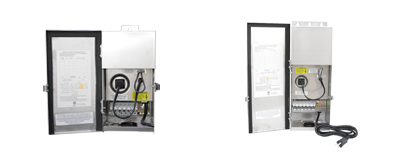
The power source dictates the reliability of the entire system. Traditional AC transformers are heavy, magnetic devices housed in ventilated stainless steel boxes. They are incredibly durable and can withstand power surges, but they are bulky and hum under heavy loads. DC systems rely on solid-state switching power supplies. These units are compact, silent, and highly efficient. Because DC power supplies contain sensitive electronic circuit boards, they must be strictly protected from moisture. When selecting a DC driver for outdoor use, you must ensure it carries an IP67 rating. This means it is fully encapsulated and protected against water ingress. Alternatively, you must house a standard DC power supply inside a dedicated NEMA-rated weatherproof enclosure.
Proper wire sizing is your only defense mechanism against voltage drop in a DC system. Wire thickness is measured in American Wire Gauge (AWG). The lower the number, the thicker the copper, and the more current it can carry over a distance without losing voltage. In DC systems, managing this resistance is critical because you lack the multi-tap crutch of an AC transformer. Installers must also choose the correct wiring topology to balance the load.
Wiring Topology | Description | Impact on Voltage Drop |
|---|---|---|
Daisy Chain | Fixtures connected in a single continuous line. | High voltage drop at the end of the run. Poor for DC. |
T-Tap | A heavy main trunk line with smaller wires branching off to fixtures. | Moderate. Good for linear property lines. |
Hub Method | A central line runs to a junction box, with equal-length wires spidering out. | Excellent. Ensures every fixture receives identical voltage. |
When planning your wire runs, you must match the gauge to the distance and the load. Pushing too much wattage through thin wire creates heat and massive voltage loss.
Wire Gauge (AWG) | Max Wattage Capacity (12V) | Recommended Max Run (AC with Multi-Tap) | Recommended Max Run (12V DC Fixed) |
|---|---|---|---|
14 AWG | 100 Watts | 100 Feet | 50 Feet |
12 AWG | 200 Watts | 150 Feet | 100 Feet |
10 AWG | 300 Watts | 250 Feet | 150 Feet |
Regardless of whether you choose 12V AC or 12V/24V DC, both architectures are classified as low-voltage systems by the National Electrical Code (NEC). This classification provides significant installation flexibility. Low-voltage systems are generally exempt from the strict conduit requirements and 18-inch trenching depths mandated for 120V line-voltage systems. Installers can typically utilize direct-burial landscape wire hidden just a few inches below the mulch or soil surface. Always verify local municipal codes. The fundamental safety profile of both AC and DC low-voltage lighting makes them safe for residential deployment around children, pets, and water features.
Audit your existing transformer and buried wire to determine if a simple AC LED retrofit is viable for your property.
Map your site and calculate the exact wire run lengths to see if a 24V DC system can handle the distance without severe voltage drop.
Source IP67-rated DC power supplies if you plan to integrate solar panels, battery banks, or smart PWM dimmers.
Upgrade your main trunk lines to 10 AWG copper if you are committing to a pure DC architecture to ensure stable power delivery.
Selecting between AC and DC landscape lighting ultimately depends on your existing infrastructure, wire run length, lighting design, and control requirements. For projects requiring reliable and professionally designed outdoor lighting solutions, Radar Lighting specializes in landscape and outdoor lighting products designed to support a wide range of architectural and landscape applications. With a focus on practical lighting performance and project requirements, Radar Lighting can help customers select suitable lighting solutions for different outdoor environments.
A: Yes, in most cases. AC-compatible LED bulbs contain a rectifier that converts AC to DC. If you feed them DC power, the current simply passes through the rectifier components and powers the diode. However, this is inefficient and negates the primary benefits of a pure DC system.
A: Connecting a pure DC LED fixture directly to an AC transformer will almost instantly destroy the diode. The rapid reversing of the AC current overloads the semiconductor, causing catastrophic failure. Always verify your power source with a multimeter before wiring native DC fixtures.
A: Yes, for larger installations. A 24V DC system can push power twice as far as a 12V DC system before experiencing noticeable voltage drop. It allows you to use thinner wire gauges over longer distances while maintaining consistent brightness across all fixtures.
A: Flickering in AC systems is usually caused by a failing internal rectifier inside the LED bulb, or by using a low-quality bulb that cannot adequately smooth the 60Hz AC sine wave. Upgrading to higher-quality bulbs or switching to a pure DC system resolves this issue.
A: In most jurisdictions, low-voltage lighting under 30 volts does not require a licensed electrician for the exterior wiring. You must plug the transformer or power supply into a GFCI-protected 120V outlet that was previously installed to code.
A: Yes, but only if you use DC landscape lighting. Solar batteries output 12V or 24V DC. Connecting DC fixtures directly to the battery bank is highly efficient. Using AC fixtures would require an inverter, which wastes significant battery power.